


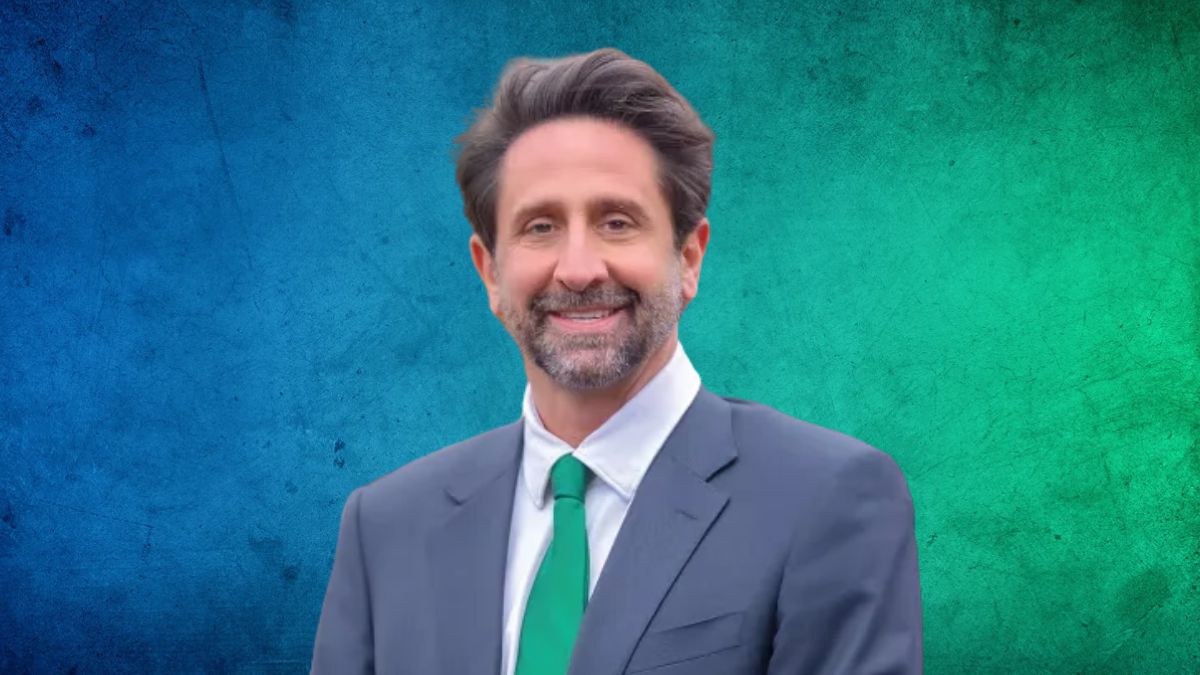
Bryan Drew Puts Independence and Everyday Costs at Center of Illinois Comptroller Bid (Chicago, IL) — Every Friday, Bryan Drew says, he has to make payroll.
That recurring obligation helps explain how the Republican candidate for Illinois comptroller talks about government finance. In his telling, the pressure of running a small business makes it difficult to accept a system in which taxes and operating costs keep rising while organizations providing essential services struggle to collect money the state owes them.
In interview with The Chicagoland Journal, Drew described his campaign as an effort to bring greater scrutiny to the state’s spending decisions. He wants the comptroller’s office to do more than process payments and publish financial reports. He wants it to challenge explanations, identify waste and make the consequences of state budgeting understandable to the people paying for it.
Drew faces Democratic state Rep. Margaret Croke in the Nov. 3 election to succeed Comptroller Susana Mendoza, who is not seeking reelection. The contest will bring new leadership to an office Mendoza has held since 2016.
Drew’s pitch rests on two kinds of experience: the responsibility of meeting a business’s obligations and the skepticism developed through practicing law. He and his wife, Christen, operate Café Bloom in Benton, according to his campaign biography. His public-service background also includes eight years as an elected Rend Lake College trustee, including two as chairman.
During the interview, he pointed to 26 years as an attorney as preparation for questioning assurances that Illinois’ finances are healthy. Statements from public officials, he argued, should be tested against evidence rather than accepted because of the position someone holds.
More Than Keeping the Checkbook
Drew described the comptroller as the keeper of Illinois’ checkbook and argued that the office should serve as a primary defense against wasteful or improper spending.
The office’s formal responsibilities include maintaining the state’s central fiscal accounts, reviewing expenditures and contracts, issuing financial reports and directing payments into and out of state funds. It also has a responsibility to ensure that payments comply with the law.
Those responsibilities provide access to information, but they do not give the comptroller unilateral control over the state’s budget. Spending decisions remain the responsibility of the governor and General Assembly, a distinction Drew has also acknowledged in earlier reporting by Capitol News Illinois.
Much of his proposed approach therefore depends on public accountability: showing residents where money goes, questioning whether expenditures serve their intended purpose and using the office’s visibility to press other officials for changes.
Drew’s argument is that affordability and oversight belong in the same conversation. Before government asks families and businesses to contribute more, he said, it should be able to explain how it is using the money it already receives.
He connected that view to his own experience with business expenses, describing the strain of higher taxes and sharply increased electric bills. For him, those costs are a reason to examine government spending more closely, not simply a separate economic concern.
When a Late Payment Becomes a Service Problem
Some of Drew’s most practical comments concerned organizations that rely on state payments.
Asked about small businesses, nonprofits, health care providers and local governments, he said delays can harm both the organizations waiting for money and the people depending on their services. He singled out providers serving veterans, people experiencing homelessness and people with disabilities.
His proposed response is a priority-payment system intended to get authorized funds to essential organizations promptly, particularly during periods of financial uncertainty.
The emphasis reflects his broader view that the state’s obligations should be understood in terms of their effect on people. An organization may have a contract and an approved funding commitment, but Drew argued that those assurances offer little protection when the money does not arrive in time to support its work.
There is a significant difference, however, between delays inside the comptroller’s office and delays elsewhere in state government.
Mendoza’s office reported that it released all pending General Revenue Fund bills at the close of fiscal year 2026 on June 30. It also said its average payment cycle had been 14 business days or less in each of the previous five fiscal years. Those figures describe the office’s handling of bills it received, rather than every step between an organization providing a service and receiving payment.
Separately, Capitol News Illinois reported in June that nonprofits continued to encounter delays involving state contracts and agencies’ submission of payment vouchers to the comptroller. Those problems helped drive legislation intended to speed the process.
For Drew’s proposal, that distinction matters. Making payments more reliable would require attention not only to which organizations receive priority, but also to where their bills become stalled before reaching the office responsible for paying them.
Pension Debt Remains a Central Concern
Asked which of Illinois’ financial challenges worried him most, Drew pointed to unfunded pension obligations and the cost of borrowing.
He cited approximately $140 billion in pension debt and argued that taxpayers continue to bear the consequences of past funding decisions. He said the comptroller should keep that obligation visible and use the office’s position to pressure lawmakers to address it.
For context, a legislative report earlier this year put the state pension systems’ unfunded liability at approximately $143.5 billion in 2025, with a combined funded ratio of 47.8%. The liability had declined slightly from the previous year, while the funded ratio had improved for four consecutive years.
Illinois’ broader credit position has also improved. The state has received a dozen credit-rating upgrades since 2021, even as pension liabilities continued to constrain further progress.
Drew’s position is that improvement should not become a reason to stop asking difficult questions.
He also highlighted the comptroller’s role in pension governance. The officeholder chairs the State Employees’ Retirement System Board and serves on the Illinois State Board of Investment, which manages pension assets for the state employees’, judges’ and General Assembly retirement systems. Those positions give the comptroller a direct role in oversight, although they do not confer sole authority over pension funding policy.
His proposed contribution combines those formal responsibilities with public pressure: scrutinize decisions, explain the consequences of underfunding and make it harder for elected officials to avoid the issue.
Independence Is His Main Contrast With Croke
Drew repeatedly returned to the question of whether a comptroller can effectively scrutinize state leaders while relying on those same leaders for political support.
He criticized Croke’s relationship with Gov. JB Pritzker and presented himself as someone who would enter the office without an obligation to defend the governor or the legislature.
Pritzker endorsed Croke and financially supported her campaign during the Democratic primary. Drew has made that relationship a central point of contrast in the general election.
Croke has rejected the suggestion that working relationships would prevent her from exercising independent judgment. In a separate interview with Capitol News Illinois, she said she would be willing to push back on Pritzker and described her primary responsibility as representing voters.
The disagreement is about more than party affiliation. Drew argues that distance from the people making spending decisions would make him a stronger watchdog. Croke has presented her experience and relationships in state government as assets.
Darden also asked Drew how his standard would apply to questionable spending by members of his own party.
He said it would not change.
Whether an official was a Democrat, Republican or independent, Drew said, misuse of public money should be exposed. He acknowledged that taking that approach could make him unpopular in Springfield but said his obligation would be to taxpayers.
That promise is central to his candidacy. The independence he is describing would require him to question political allies as readily as opponents.
Connecting State Decisions to Local Tax Bills
Drew also sought to connect the comptroller’s work to concerns closer to home, particularly property taxes and the financial condition of smaller municipalities.
He argued that when the state reduces support for local governments, it can leave communities under pressure to raise additional revenue for public safety, health services and other needs. In his view, residents deserve a clearer explanation of how decisions made in Springfield can contribute to costs appearing on their local tax bills.
His proposed role is primarily one of advocacy and disclosure. He wants to use the office to show where money is going, challenge spending he considers unwise and argue for resources to reach municipalities.
Asked about historically underserved communities, Drew returned to the importance of timely payments and fair treatment. He criticized what he regards as politically driven spending and argued that communities with unmet needs should not be disadvantaged by a lack of influence in Springfield.
Taken together, his answers present a campaign built less around a single budget proposal than around a different approach to oversight. Drew wants voters to see financial accountability as something that affects a business’s ability to keep employees, a provider’s ability to maintain services and a community’s ability to meet its obligations.
His case begins with the deadline he faces every Friday. Government, he argues, should take its responsibilities to the people waiting on its money just as seriously.
Bryan Drew Puts Independence and Everyday Costs at Center of Illinois Comptroller Bid