


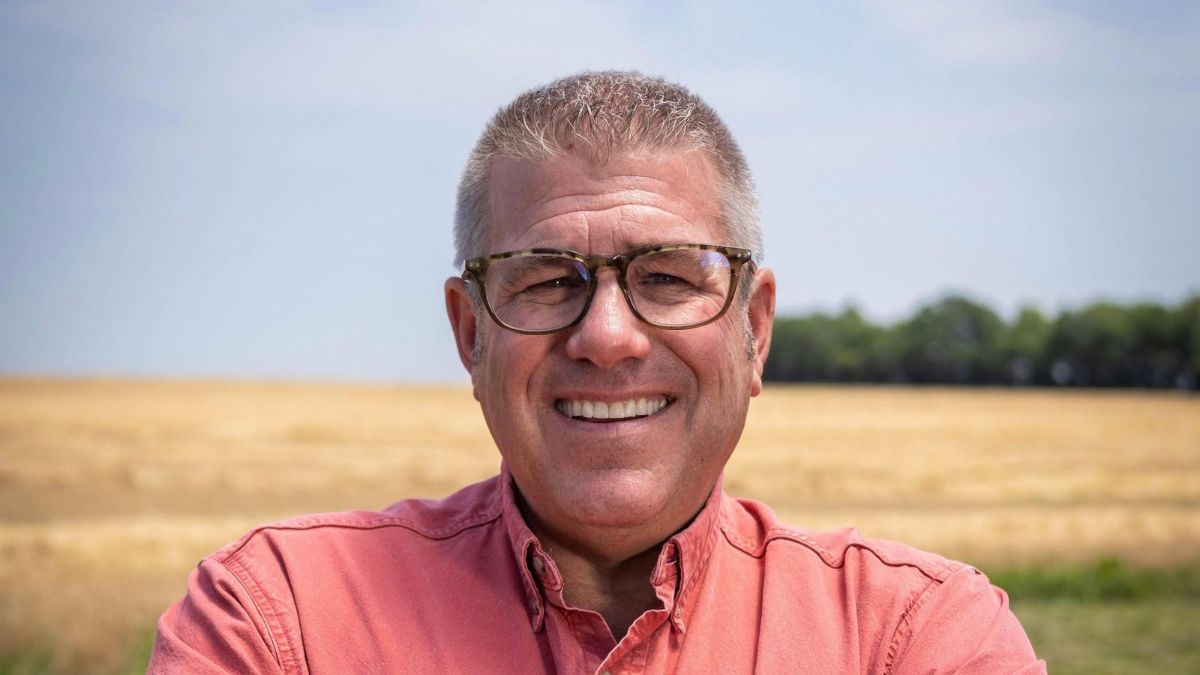
Darren Bailey Makes His Case for Illinois, Focusing on Affordability, Opportunity and a Different Approach to Governing (Chicago, IL) — In an interview with The Chicagoland Journal, the Republican candidate for governor discussed his family’s personal loss, visits to Chicago neighborhoods, property tax relief, education, public safety and what he believes Illinois residents should expect from their next governor.
For Darren Bailey, the race for Illinois governor is about more than political disagreements in Springfield. It is about whether families can afford to remain in the communities they call home, whether young people can find meaningful opportunities and whether state government is listening to the people it serves.
The Republican candidate, a farmer and former state legislator from southern Illinois, spoke with The Chicagoland Journal on Sunday, November 1, just two days before voters head to the polls. Throughout the interview, Bailey returned to three priorities he believes transcend political affiliation: affordability, public safety and education.
But the conversation also revealed a more personal side of the candidate, including the loss of family members, the encouragement he has received from strangers and his experiences visiting neighborhoods across Chicago.
“Illinois is home,” Bailey said. “It’s where my children are at. It’s where my grandchildren are at.”
Bailey and his wife, Cindy, have spent considerable time traveling throughout Illinois, meeting residents and business owners. Those interactions, he said, have strengthened his belief that the state has enormous potential despite the financial and social challenges facing many communities.
His connection to Illinois has also taken on deeper meaning following a devastating family tragedy. Bailey spoke about losing his son Zachary, his daughter-in-law and two grandchildren in 2025, an experience that continues to shape his perspective.
He recalled walking through downtown Chicago and being approached by strangers offering condolences.
“We have really experienced and continue to experience the goodness of all of Illinois,” Bailey said.
Those encounters have reinforced something he wants voters to understand: Although he is deeply critical of Illinois government, he has not lost faith in Illinois residents.
“Illinois is good,” he said. “Unfortunately, Illinois is difficult to live in.”
Finding common ground in Chicago’s neighborhoods
One of the more revealing portions of the interview came when Bailey discussed his visits to Chicago’s South and West sides.
A farmer whose political career began in downstate Illinois, Bailey acknowledged that his understanding of Chicago has evolved over time.
“When I became a state rep in 2019, same year that JB Pritzker became the governor, I mean, yeah, I’m a downstate farmer,” he said. “At that time, I didn’t understand Chicago.”
What he did understand, Bailey explained, was the importance of economic opportunity.
He described walking though Chicago’s West Side with his wife and a local pastor, where he encountered residents struggling with unemployment, disappearing businesses and limited access to basic services.
Bailey recalled seeing the effects of a grocery store closure and a pharmacy leaving the neighborhood. Beyond the loss of places to shop, he said, those closures represented a broader erosion of neighborhood stability.
He was particularly struck by conversations with young men who wanted jobs but struggled to find opportunities.
“I saw young men who really want to work,” Bailey said. “They want opportunity, but it’s taken away from them.”
For Bailey, the experience reinforced his belief that addressing crime, poverty and neighborhood disinvestment requires more than law enforcement or government assistance alone. It requires an economic environment where businesses can succeed and residents can build stable lives.
He argued that government regulations, taxes and the cost of doing business have discouraged investment in neighborhoods that need it most.
His proposed approach would involve reducing those burdens while giving local business owners and community leaders a greater role in shaping economic development decisions.
“Local business owners and communities will have a voice at the table,” Bailey said.
He also promised that, if elected, he would spend time in neighborhoods rather than limiting his interactions with residents to official events and ceremonial appearances.
The discussion reflected a recurring theme in Bailey’s campaign: His belief that the economic frustrations of residents in Chicago and rural Illinois have more in common than their political differences might suggest.
A promise of immediate relief for families
Bailey’s most concrete proposals centered on reducing everyday expenses.
Asked what he would do first to help a working family struggling with monthly bills, he pointed to Illinois’ motor fuel tax.
“On day one, I will issue an executive order to suspend the gas tax,” Bailey said.
He argued that Illinois motorists face substantially higher gasoline prices than drivers in neighboring states, particularly Indiana, Wisconsin and Iowa.
Bailey also proposed rolling back tollway increases, arguing that higher commercial transportation costs eventually reach consumers through increased prices on groceries and household goods.
His broader economic agenda includes reducing utility expenses, revisiting the state’s approach to energy development and limiting property taxes.
Bailey expressed concern about the growing electricity demands of data centers, arguing that Illinois should negotiate more favorable arrangements with large energy users to protect residential customers from higher rates.
But perhaps his most ambitious proposal is a property tax cap of 1% of a home’s value.
Under the example Bailey provided, a homeowner with a $100,000 property would pay approximately $1,000 annually in property taxes.
He pointed to neighboring states as examples of jurisdictions that have pursued property tax limitations, arguing that Illinois needs a similar approach to remain competitive.
The proposal raises substantial questions about how school districts, municipalities and other local governments would replace revenue lost under such a cap. Property taxes are a major funding source for public education, police and fire protection, libraries and other essential services.
Bailey argued that reducing wasteful state spending and redirecting existing resources could help make the proposal possible without sacrificing services.
He also criticized state spending on immigrant services and economic development incentives, making several financial claims that would require examination of budget records to establish their accuracy and context.
For Bailey, however, the underlying argument is straightforward: Illinois should examine how it spends existing tax revenue before asking residents to contribute more.
At one point, he held up a stack of mail that had accumulated while he and his wife were traveling.
Among the envelopes, he said, were credit card statements, a telephone bill and an electricity bill.
“How about a governor who actually pays his own bills and understands what it means … for the high cost of living and the struggles that people are going through here in Illinois?” Bailey asked.
Education, local control and preparing students for the future
Education is another issue Bailey approaches through his experience as a former local school board member.
He argued that Illinois schools need greater flexibility to respond to the needs of their communities and that parents should have more influence over their children’s education.
“Local control is giving the school boards and the administration and board members and communities the ability to decide how they want to educate their children,” Bailey said.
Bailey also emphasized the importance of preparing students for careers that do not require four-year college degrees.
He pointed to electricians, mechanics, plumbers, cooks and utility workers as examples of careers that public schools should help students explore.
For students interested in college, Bailey said Illinois should work toward making its universities more attractive and affordable.
For those pursuing other paths, he wants schools to provide meaningful vocational preparation.
Bailey also supports expanding school choice, including allowing public education funding to follow students into alternative educational settings.
That tactic would represent a significant shift in how Illinois distributes education dollars and would require decisions about accountability, funding and the financial effects on traditional public schools.
For Bailey, educational improvement begins with giving communities more authority over how children are taught.
Public safety and the importance of opportunity
Bailey’s discussion of public safety was closely connected to his observations about unemployment and economic conditions in Chicago.
He criticized Illinois’ SAFE-T Act, particularly the elimination of cash bail, arguing that changes to the criminal justice system have made it more difficult to keep dangerous offenders detained before trial.
However, Bailey acknowledged that he initially understood the reasoning behind eliminating cash bail for people accused of minor offenses who could not afford even relatively small bonds.
He said his concerns grew as the legislation developed.
Under Illinois’ current pretrial system, prosecutors can seek detention for people accused of serious offenses, including murder and certain sexual offenses. Judges determine whether detention is justified under the law’s standards. The elimination of cash bail does not require the automatic release of everyone accused of a violent crime.
Bailey argued that law enforcement officials, prosecutors and community organizations should have a stronger voice in developing public safety policy.
He also said that prevention requires creating opportunities for young people before they become involved in criminal activity.
Returning to his conversations on Chicago’s West Side, Bailey suggested that access to jobs and economic stability could make a meaningful difference in communities experiencing persistent poverty and violence.
He said the people working directly in those neighborhoods often understand the problems better than policymakers in Springfield.
“They’re there,” Bailey said of community workers. “They just need a governor who’s going to reprioritize things and make this happen.”
According to Bailey, his is approach would involve bringing law enforcement, community organizations, business leaders and residents together rather than allowing decisions to be made without their participation.
Health care presents a more complicated challenge
When the conversation turned to health care, Bailey offered a notably different response.
Rather than outlining an immediate executive action or specific legislative proposal, he acknowledged that improving health care access and affordability would require further work.
The interviewer asked how he would help families obtain dependable health care in rural communities and Chicago-area neighborhoods.
Bailey identified rising costs, government inefficiency and the effects of litigation as concerns, suggesting that reducing administrative burdens and examining legal costs could be part of a broader solution.
He also recognized that Illinois has significant disparities in access to health care facilities and services.
Some communities benefit from major hospitals and extensive medical networks, while others face more limited options.
Bailey said addressing those differences would require collaboration with people who understand the health care system.
“I’m going to be honest. I don’t have the immediate answer for that,” Bailey said.
He nevertheless described health care as a priority that should receive consistent attention from the governor’s office.
A different relationship with Springfield
Throughout the interview, Bailey sharply criticized Democratic Gov. JB Pritzker, whom he is challenging in a rematch of their 2022 election. Pritzker is seeking a third term.
Bailey argued that the governor and Democratic legislative majorities have had sufficient time and authority to address Illinois’ problems.
He repeatedly questioned why rising costs, educational concerns and economic challenges persist after eight years of Pritzker’s administration.
Pritzker and his administration have advanced a different approach, emphasizing state investments and public programs. The two candidates disagree over taxation, criminal justice, government spending and the appropriate role of state government.
Bailey insisted that he could find common ground with legislators by focusing on issues that affect families regardless of party affiliation.
He described affordability, safety and education as concerns shared by an overwhelming majority of residents, although he did not cite polling data supporting that assessment.
“I’m going to be the mouthpiece for Illinois,” Bailey said. “I’m going to be in every community listening.”
He also spoke about the responsibilities of leadership through the lens of his farming background.
A farmer cannot simply wait for conditions to improve, Bailey explained. Crops must be planted, work must be completed and difficult decisions must be made regardless of the circumstances.
That, he said, is the work ethic he would bring to the governor’s office.
What success would look like
Near the end of the interview, Bailey was asked to imagine sitting down for another conversation after completing his first term as governor.
What would he want Illinois families to say had improved?
His answer was immediate.
“Their pocketbook.”
For Bailey, success would mean families no longer feeling compelled to leave Illinois because of property taxes, utility bills and other living expenses.
He said he would want residents to feel that they could finally afford to remain in their homes, raise their children and plan for the future.
Bailey went further, suggesting that Illinoisans could begin seeing meaningful changes within the first six months of his administration.
Whether such a timeline is achievable would depend on legislative cooperation, the state’s financial obligations and the details of the policies his administration pursued.
But the answer also reflected the central message he returned to throughout the conversation: Government should be judged by whether people’s everyday lives are improving.
Although Bailey’s criticisms of Pritzker were pointed, he repeatedly framed his campaign around issues he believes could unite Illinoisans rather than divide them.
“I am not going to do anything that divides us,” Bailey said. “I am focused on only what unites us.”
It is a message Bailey hopes will resonate beyond his traditional political base, particularly among residents of Chicago and its suburbs who may not have supported him in previous elections.
His challenge is translating that message into a governing agenda capable of addressing the very different needs of Illinois’ urban, suburban and rural communities.
The interview offered a picture of a candidate who remains deeply rooted in his rural upbringing but who increasingly speaks about the economic and social challenges facing Chicago neighborhoods.
It also revealed the tension between the urgency of his promises and the complexity of the problems he hopes to solve.
Bailey’s confidence in Illinois’ potential was unmistakable. So was his belief that residents deserve a more responsive state government.
As the conversation concluded, he returned to the importance of participation in the democratic process.
He encouraged Illinoisans to vote, invoking the sacrifices of military veterans and service members who helped protect the country’s democratic institutions.
For Bailey, the coming election represents an opportunity for residents to make their voices heard.
Darren Bailey Makes His Case for Illinois, Focusing on Affordability, Opportunity and a Different Approach to Governing