


Resident Presses District 161 for Spending Answers as Board Approves $2.3 Million in Bills (Flossmoor, IL) — Before Flossmoor School District 161 board members approved roughly $2.3 million in monthly bills, a resident stood before them with concerns about special education spending, unanswered emails and her difficulty obtaining the documents behind the district’s decisions.
The resident, identified as Agnes, used the Oct. 13 public comment period to challenge the cost of sending students to schools outside the district and to ask why her requests for information had not produced the answers she wanted.
“I would just like to receive the packet,” she said. “Better late than never.”
Her comments brought a pointed demand for accountability to a meeting that also included a review of district contracts, preparations for school construction and a discussion about protecting approximately $50,000 in potential property tax revenue.
Agnes described tuition for outside special education placements as “astronomical,” naming programs in several communities and questioning the expense of transporting children to them. She cited an annual cost of $76,000 for a placement at Elim Christian School and said transportation spending exceeded half a million dollars.
Special education placements also carry obligations beyond their price. Federal regulations require children placed in private schools or facilities by public agencies to receive services consistent with their individualized education programs at no cost to their parents. Such placements are part of the public system’s responsibility to serve students with disabilities.
Agnes’ criticism extended to communication. She said she had sent detailed spending information to district officials, had been working with state agencies and believed board members were not receiving or responding to her messages.
As Board President David Linnear repeatedly thanked her and brought the comment period to a close, she urged officials to read their emails.
“You can’t kill the message just because you don’t like the message,” she said.
Board members did not substantively address her spending figures or records concerns during the remainder of the meeting.
Later, in a separate report, Superintendent Terrance Sanders told the board that his administrative team had begun examining contracts the district already has approved. The review, he said, includes looking for overlapping services and determining whether the district is receiving sufficient value.
“Are there areas where we’re not necessarily getting the biggest bang for our bucks?” Sanders asked.
His remarks described a review in progress, with no specific contracts identified for cancellation or savings announced.
Sanders took over July 1 following a superintendent search that included community surveys and focus groups. In announcing his appointment, the district said listening, communication and effective implementation were among the qualities sought in its next leader.
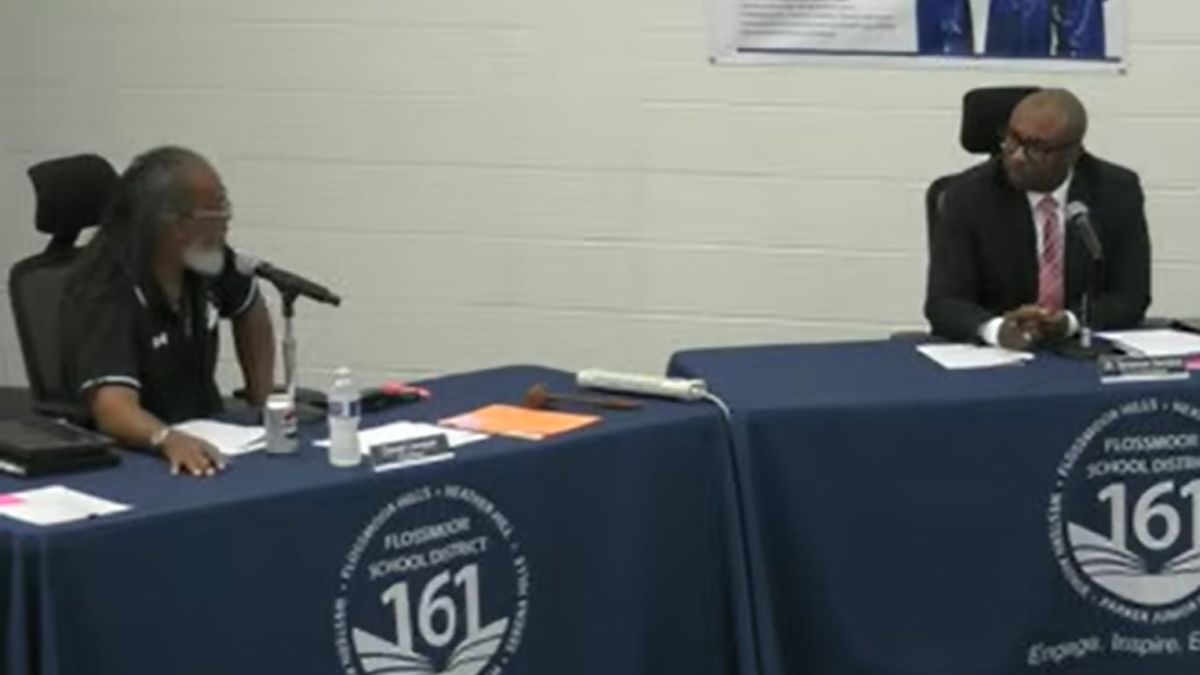
At the meeting, Linnear acknowledged that Sanders had passed his first 100 days on the job, drawing applause.
The superintendent also acknowledged work ahead in the district’s relationship with Bloom Township High School. Asked by Linnear about that relationship, Sanders said it needed strengthening.
The exchange came during a period of change for the board itself. Dr. Crystal Cleggett and attorney James Ulwick were appointed Sept. 28 to fill vacancies left by Christina Vlietstra and Dr. Carolyn Griggs.

The board’s financial votes moved quickly.
Board Secretary Ashley Giddens reported that she had reviewed the monthly bills, totaling approximately $2.3 million. Members approved them unanimously without questions during the public discussion.
That vote authorized payment of the bills presented to the board; it was separate from the administration’s broader review of existing contracts.
Members also authorized the district to seek bids for summer 2027 construction at Flossmoor Hills and Western Avenue schools.
Linnear asked whether the projected cost had changed since the board’s previous presentation. Associate Superintendent Frances LaBella explained that the budget figures remained estimates until contractors submitted bids. The action allowed the bidding process to proceed, with actual prices still to be determined.
A longer discussion concerned property tax appeals and the district’s role in contesting reductions that could affect school revenue.
LaBella explained that the district receives notice when a property owner seeks an assessment reduction of $100,000 or more before the Illinois Property Tax Appeal Board. The district routinely retains attorneys to intervene and shares legal expenses with Homewood-Flossmoor High School District 233 when both districts have an interest in the property.
She described some appellants as repeat filers who challenge their assessments annually or during each three-year assessment cycle.
Two pending appeals, she said, represented approximately $50,000 in potential tax revenue exposure for a single year.
Property assessment appeals provide owners a means to challenge how their property is valued for taxation. The state appeal board determines the correct assessment based on the evidence; it does not decide tax rates or the amount of an individual tax bill.
LaBella told members that updated authorization requirements would change how the district handles those cases. Instead of relying on a broad resolution covering a three-year period, the board would need to authorize intervention in individual appeals.
Linnear questioned whether the change served a purpose beyond increasing administrative work.
LaBella said the attorneys’ filings would remain largely the same. The additional task would fall to the board, which would have to act before the applicable deadlines. She identified Nov. 13 and Nov. 27 as the deadlines for the first two cases discussed.
Linnear asked whether future resolutions could be placed on the consent agenda, allowing members to approve them together with other routine business. LaBella said she would consult the district’s attorneys.
The meeting adjourned at 6:50 p.m. Members had approved the monthly bills, advanced construction planning and discussed the next steps in defending district revenue. Agnes’ request for a board packet, and an explanation of the expenses she questioned, remained publicly unresolved.
Resident Presses District 161 for Spending Answers as Board Approves $2.3 Million in Bills