



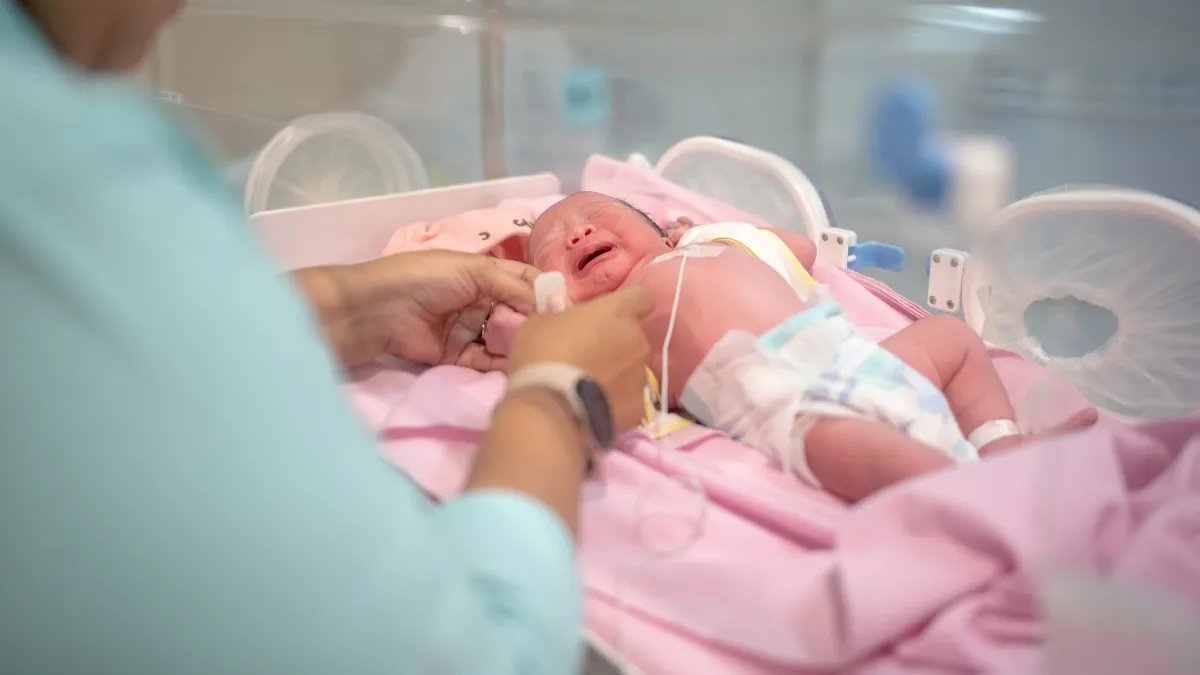
Roseland Stops Delivering Babies as Far South Side Maternity Options Shrink (Chicago, IL) — Roseland Community Hospital has stopped delivering babies, leaving Far South Side families with fewer maternity options while the hospital searches for funding that could allow the unit to reopen.
The unit’s final day of service was Oct. 31, with the suspension taking effect at midnight Nov. 1. Roseland has classified the shutdown as temporary, but has not established a reopening date.
In an Oct. 2 notice to state regulators, Chief Executive Officer Timothy Egan said the hospital could no longer absorb the labor and delivery unit’s funding shortfall without threatening its financial stability and other essential services.
The hospital said it would calculate the funding needed to sustain the unit, seek discussions with state officials about reimbursement and additional operating support, and consider partnerships. It also committed to reassessing financial feasibility and reporting progress at 30-day intervals.
Hospital leaders have also cited declining birth volumes. Dr. Joy West, Roseland’s former obstetrics and gynecology department chair, told WTTW News that staff understood deliveries were declining but “we didn’t think that it would happen so suddenly.”
The financial strain predates the maternity shutdown. In June, Egan told Becker’s Hospital Review that Medicaid claims payments had helped the hospital cover payroll. The publication reported that the state’s fiscal 2027 budget included a $16 million grant for Roseland, but Egan warned that delays in accessing it could threaten payroll and vendor payments.
At that time, the hospital was preparing executive pay cuts and employee furloughs. Egan told the publication that closing departments or eliminating services remained possible as administrators tried to preserve the hospital.
Businessman and Chicago mayoral candidate Dr. Willie Wilson has called on Gov. JB Pritzker, Mayor Brandon Johnson and legislative leaders to identify emergency funding for maternity services at Roseland. He warned that the loss would compound longstanding health disparities on the Far South Side.
“No expectant mother should have to worry about whether she can reach a hospital in time to safely deliver her child,” Wilson said.
Roseland’s filing makes reopening contingent on sufficient, sustainable funding. Meanwhile, the hospital is retaining an outpatient obstetrics clinic, according to NBC Chicago, allowing some pregnancy care to continue while planned deliveries move to other hospitals.
The suspension has already changed emergency transportation planning. An Oct. 28 memo from the Region 11 EMS Medical Directors Consortium notified ambulance providers of Roseland’s status change and directed them to transport perinatal patients to the closest appropriate facility under regional protocols.

For families who rely on walking, public transportation or a ride from someone else, another hospital’s availability does not necessarily mean an easy trip. West told WTTW that longer travel would add to transportation and financial difficulties already facing patients.
Advocate Trinity Hospital, roughly four miles from Roseland, remains a nearby delivery option. But its maternity services are also slated for discontinuation as Advocate changes its South Side hospital operations.
Advocate broke ground in June on a $300 million hospital at the former U.S. Steel South Works site to replace Trinity’s aging campus. The health system says the existing hospital will continue serving patients until the replacement is operational.
State planning records show that the replacement model would retain outpatient obstetric and gynecologic services while shifting planned deliveries to Advocate Christ Medical Center in Oak Lawn. Advocate’s application also described transportation assistance for patients giving birth at Christ.
The state review acknowledged the trade-offs. Staff warned that losing obstetric services could increase travel distances, disrupt continuity of care and complicate treatment when patients arrive without transferred medical records. Those concerns are especially relevant as Roseland patients also move into other hospitals’ care.
The changes are unfolding against a stark record of maternal health disparities. An Illinois Department of Public Health report released in November 2025, examining deaths in 2021 and 2022, found that Black women were more than twice as likely as white women to die from pregnancy-related conditions.
Review committees determined that 91% of pregnancy-related deaths during that period were potentially preventable. About one-third occurred more than 60 days after delivery, underscoring the need for care that continues well beyond childbirth.
Roseland’s suspension also follows the Oct. 1 closure of inpatient maternity units at Resurrection Medical Center in Chicago, Saint Joseph Medical Center in Joliet and Mercy Medical Center in Aurora. NBC Chicago reported that all three are owned by Prime Healthcare.
For West, the concern is what happens when communities already facing poor maternal health outcomes lose another place to seek care. Speaking to WTTW, she compared the loss of maternity services to removing a basic emergency resource.
“It’s like removing a fire station from a community that has lots of fires,” she said.
Roseland Stops Delivering Babies as Far South Side Maternity Options Shrink