


A North Lawndale School’s Harvest Reaches Beyond the Garden (Chicago, IL) — At CCA Academy in North Lawndale, students are learning how to grow food that can help feed their neighbors. Now, the school is working to carry those lessons into the kitchen, connecting a garden harvest with the skills needed to turn it into a nutritious meal.
The effort builds on a productive year. In 2025, the school grew more than 2,000 pounds of fresh produce for families in North Lawndale and surrounding communities, doubling its production, according to the academy.
Behind that harvest is an approach to education that gives young people a chance to see their work make a difference close to home.
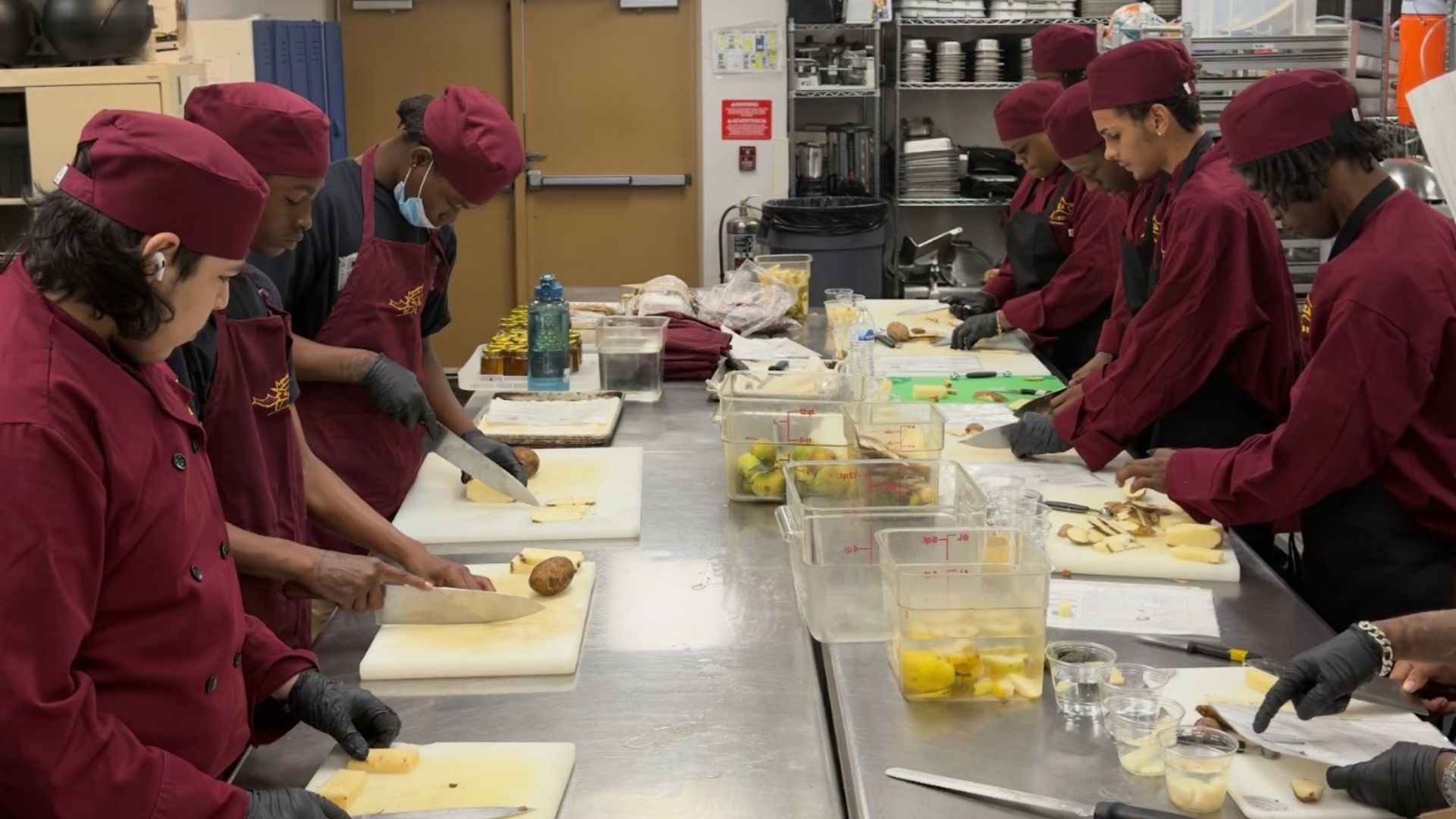
CCA Academy, formally known as Community Christian Alternative Academy, is strengthening the connection between its urban agriculture and culinary programs. Students can learn different stages of the food cycle, from planting and harvesting to food preparation and nutrition. The school hopes to expand its ability to provide fresh produce and hot meals to residents facing barriers to affordable, healthy food.
“We want to create a sustainable cycle where our students learn how to grow food, understand where their food comes from, prepare nutritious meals and use those skills to serve their community,” said Dr. Myra Sampson, the school’s founder and CEO.
Urban agriculture has been part of CCA’s educational work for more than 20 years. Its growing spaces include two urban gardens, a greenhouse and a 2,000-gallon aquaponics system. Chickens, beehives and native plants are also part of an outdoor learning environment that connects classroom subjects with the care of living things.
One of its most distinctive spaces is PermaPark, a half-acre food forest with more than 70 fruit trees and bushes, growing areas and gathering spaces built by students.
Since 2016, students and community partners have helped turn vacant land into green spaces that produce food and support wildlife, water retention and environmental resilience. Those spaces give students a place to study how the health of the land connects with the health of a neighborhood.
The kitchen offers another way to put that knowledge to work.

Culinary lessons cover food preparation, nutrition, food safety and hospitality. Linking those lessons with the gardens gives students an opportunity to follow an ingredient from the place it grows to the meal it can become.
It also introduces possibilities for life after school. Experience in growing and preparing food can help students explore careers in agriculture, culinary arts, hospitality and food production, along with interests in sustainability or starting a business.
CCA serves nontraditional students ages 16 to 21 and has provided educational opportunities in Chicago for 48 years. Its combination of academics, practical learning and workforce preparation is meant to help young people build a path beyond the classroom.
The agriculture and culinary programs bring a neighborhood purpose to that work: students develop their own abilities while contributing to an effort to make healthy food more accessible.
The school plans to add a second growing season and is seeking community partners and financial support to increase food production and expand its culinary efforts. A larger harvest would give students more opportunities to learn and the school more food to share.
For Sampson, the connection between those goals is central to the effort.
“At the same time, we are helping make sure families in North Lawndale have access to fresh produce and healthy meals,” she said.
A North Lawndale School’s Harvest Reaches Beyond the Garden