


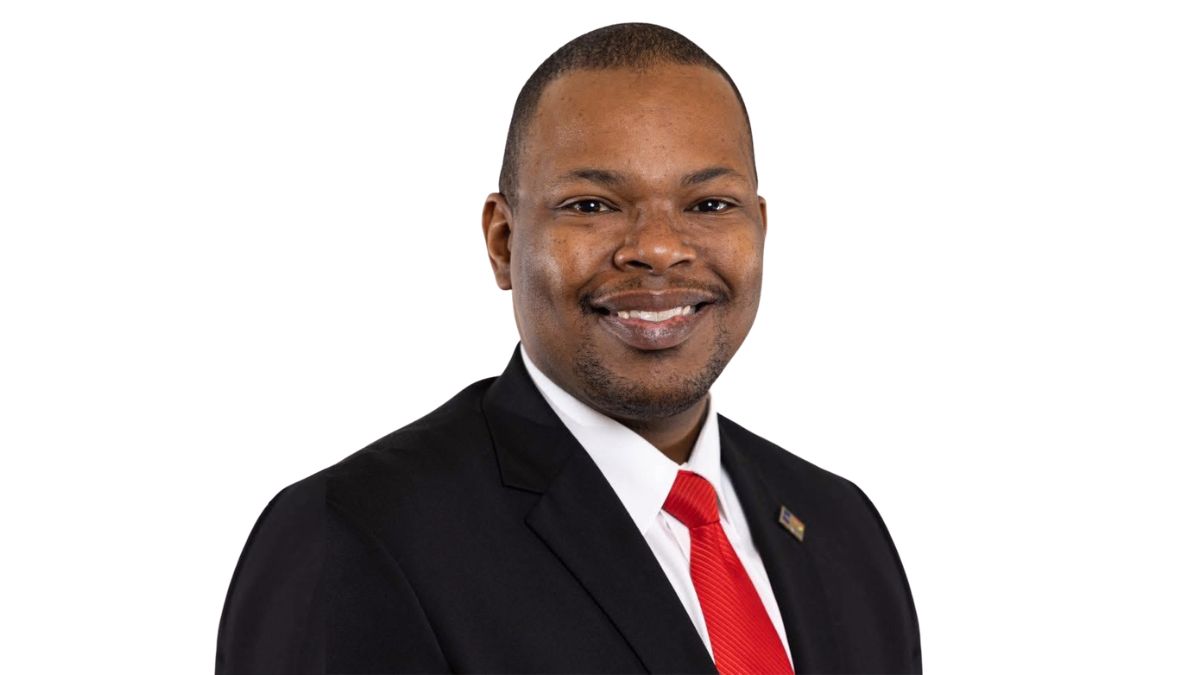
Park Forest Is Personal as Joshua Travis Makes Third Run for Village Trustee (Park Forest, IL) — For Joshua Travis, the decision to seek a seat on the Park Forest Village Board is tied to something more personal than politics, it is tied to home.
Travis said he came to Park Forest after spending part of his childhood in foster care. It was here, he said, that he found stability, opportunity and a community that helped shape the direction of his life.
“Park Forest is my home,” Travis said during a recent interview. “It’s not just a bunch of houses and streets put together. It’s a magical place that can change the trajectory of people’s lives.”
Now, Travis is preparing for his third run for Park Forest village trustee, entering the 2027 municipal election with a message centered on property taxes, aging infrastructure, economic development, and what he describes as the need for a more active leadership style.
The April 6, 2027, consolidated election will include three four-year seats on the Park Forest Village Board. The formal candidate filing period is scheduled for Nov. 16 through Nov. 23.
For Travis, another campaign comes after two previous attempts that ended in defeat but, he said, strengthened his determination to remain involved. “The first time I ran, it was because I was seeing education leave in the area,” Travis said. “I grew up here in Park Forest.”
After returning home from Illinois State University, Travis said he noticed that some of the educational, health and community resources he remembered from childhood were disappearing.
His professional work in the nonprofit sector made those changes harder for him to ignore.
“I saw issues that were happening in Chicago that were reflected here in our own community,” he said.
His first two campaigns fell short. Travis said the margin narrowed considerably the second time around, but he insists the losses did not end his involvement in Park Forest. Instead, he continued working in the community and eventually won a seat on the Park Forest Public Library Board. Official library records show Travis was sworn in as a library trustee in May 2025 and currently serves on the seven-member elected board.
Now, he believes that experience has given him something he did not have during his earlier campaigns: a governing record.
Property Taxes at the Center of His Campaign
Ask Travis about the biggest challenge facing Park Forest and he does not hesitate.
“Property taxes and infrastructure,” he said.
Throughout the interview, Travis repeatedly returned to the financial pressure he says homeowners are experiencing.
He argues that government cannot rely indefinitely on increasing levies or simply helping individual homeowners obtain exemptions. In his view, exemptions may provide relief to some residents but do not address the underlying challenge of sustaining the overall tax base.
His proposed approach would include looking more aggressively for grants and outside funding, attracting additional residents and businesses, and examining municipal spending.
Travis pointed to his work on the library board as an example of the approach he wants to bring to the Village Board. He said he has pushed for lowering the library’s tax levy while looking for grants and other resources to offset costs.
Within his first 100 days as a village trustee, Travis said he would seek a formal resolution identifying property taxes as a major regional problem and calling for a multiyear strategy aimed at reducing the burden on residents.
He also wants Park Forest officials to work more closely with neighboring municipalities and county and state officials on issues that cannot be solved by one community alone.
For Travis, that regional approach is particularly important when talking about schools. He argues that local property taxes cannot be discussed separately from the way education is funded.
“The true fight here is the south suburbs,” Travis said, arguing that communities should spend less time competing against one another and more time working collectively to attract investment to the region.
The Park Forest He Remembers
Travis’ argument for investment often comes back to his own childhood. Raised by a single mother, he remembers being a latchkey kid who would leave school and spend time at the Park Forest Public Library doing homework before heading home.
But the library was only one piece of the community he remembers.
There were cultural programs. Theater. Environmental education. Wetland exploration. Places where a child could learn something, discover an interest or simply have somewhere constructive to go. Those experiences remain central to how Travis talks about economic development.
For him, attracting families to Park Forest is not simply about constructing homes or marketing available property. He believes families have to see a community where they can build a life. That requires parks, educational opportunities, cultural programs, strong public institutions and businesses people actually want to use, he said.
“If we want to increase the tax base,” Travis said, the village has to make Park Forest “a community that more people want to be a part of.”
Looking at Downtown Differently
Travis also sees downtown Park Forest as one of the village’s greatest opportunities. His frustration is with vacant or underused storefronts that, in his view, could become temporary homes for community organizations, entrepreneurs, educational programs and other local initiatives.
Rather than focusing primarily on the appearance of empty storefronts, Travis said he wants village officials to be more aggressive about finding ways to activate those spaces.
He pointed to community organizations that need affordable places to operate and questioned why vacant properties could not be used more creatively while longer-term redevelopment efforts continue.
The broader goal, he said, should be bringing people back into the downtown and giving them reasons to stay there.
From Complaints to Connections
Campaigning door to door has also shaped Travis’ view of what a trustee should actually do.
He said residents often begin conversations by complaining about government, but underneath those frustrations are usually specific problems: a road that needs attention, questions about water, difficulty navigating village services or uncertainty about whom to call. Sometimes, Travis said, people simply want someone to listen.
He recalled meeting a woman while campaigning who complained that a section of her street became dangerously icy during the winter. Her son told Travis visiting the home had become difficult because of the condition of the roadway.
Travis said he contacted village staff about the problem. When he returned the following winter, the section had been repaired.
For him, the episode illustrates the kind of role he believes an elected official should play. Residents should not receive a phone number and be sent on their way, he said. A trustee should help them navigate the system.
“They need an advocate and a champion,” Travis said.
That philosophy has also influenced his community work. Travis said he helped coordinate a partnership between the Park Forest Police Department and an outside organization to establish a trauma-informed room for survivors of sexual assault and domestic violence. His current campaign materials also identify that project as one of his community initiatives.
He believes trustees should be willing to pursue projects individually rather than waiting for every initiative to begin with the full Village Board.
A More Visible Village Government
Travis is less critical of Park Forest when it comes to transparency itself. He acknowledged that village meetings are public and that documents and information are generally available.
His criticism is that simply making information available does not necessarily mean residents feel involved. He would like to see more opportunities for public comment and a sustained series of neighborhood meetings that take village officials outside Village Hall.
Throughout the summer, for example, Travis envisions elected officials regularly meeting residents in parks, neighborhoods and community spaces.
“You have to be available to meet people where they are,” he said. “That includes your government.”
He also wants advisory boards and commissions to have a larger role, potentially working alongside neighborhood or block-level representatives who could bring concerns from residents directly into village government.
The objective, he said, is making government more proactive instead of waiting for problems to reach a crisis.
An Independent Voice
Travis makes little effort to portray himself as someone who will avoid disagreement. In fact, he embraces the opposite image.
He acknowledged that his outspoken approach has sometimes rubbed people the wrong way and said he has had to learn that having an idea is not enough if the way he communicates it prevents others from hearing the substance.
“I’ve had to change who I am fundamentally,” he said, explaining that he has learned to examine not only what he says but how he delivers the message.
Still, Travis said he has no intention of becoming quiet simply because disagreement makes people uncomfortable. He said he has challenged political allies, friends and fellow board members and would continue doing so as a trustee.
“I don’t work for you. I work for the community,” he said of his approach to public office.
Behind that determination, Travis said, is another deeply personal experience. He spoke about losing his brother and said the loss helped give him a mission that continues to guide his work.
His goal, he said, is “to make this world a little bit better than it was when he was alive.”
That mission, Travis said, matters more to him than maintaining political relationships.
One More Run
There is also an unusual finality surrounding this campaign. Travis said this will be his third and final attempt to win a seat on the Village Board.
“This is my last run,” he said with a laugh. “Three times, you saying you don’t want me after three times, I can take rejection.”
But he quickly added that losing would not mean disappearing. He said he intends to remain involved in advocacy at the local, county and state levels regardless of what happens in April. That may be the clearest difference between the way Travis describes this campaign and a traditional pitch for public office.
He talks about winning a trustee seat, but he spends just as much time talking about what residents themselves can do without one. Start a community garden. Organize around an issue. Connect an organization with a public agency. Find a resource the community is missing. “You don’t need a title,” Travis said. “You don’t need an office.”
Still, after two unsuccessful attempts, he believes a seat on the Village Board would give him a stronger platform for the work he says he intends to continue either way. His message to voters is to look beyond campaign rhetoric, research the people asking for their votes and ask candidates directly what they intend to do.
For Travis, the reason he keeps returning to the ballot comes back to the place where his own life changed.
“This is where I’m going to grow old,” he said. “This is where my home will be forever.”
And that, he said, is why he keeps fighting for Park Forest.
Park Forest Is Personal as Joshua Travis Makes Third Run for Village Trustee