



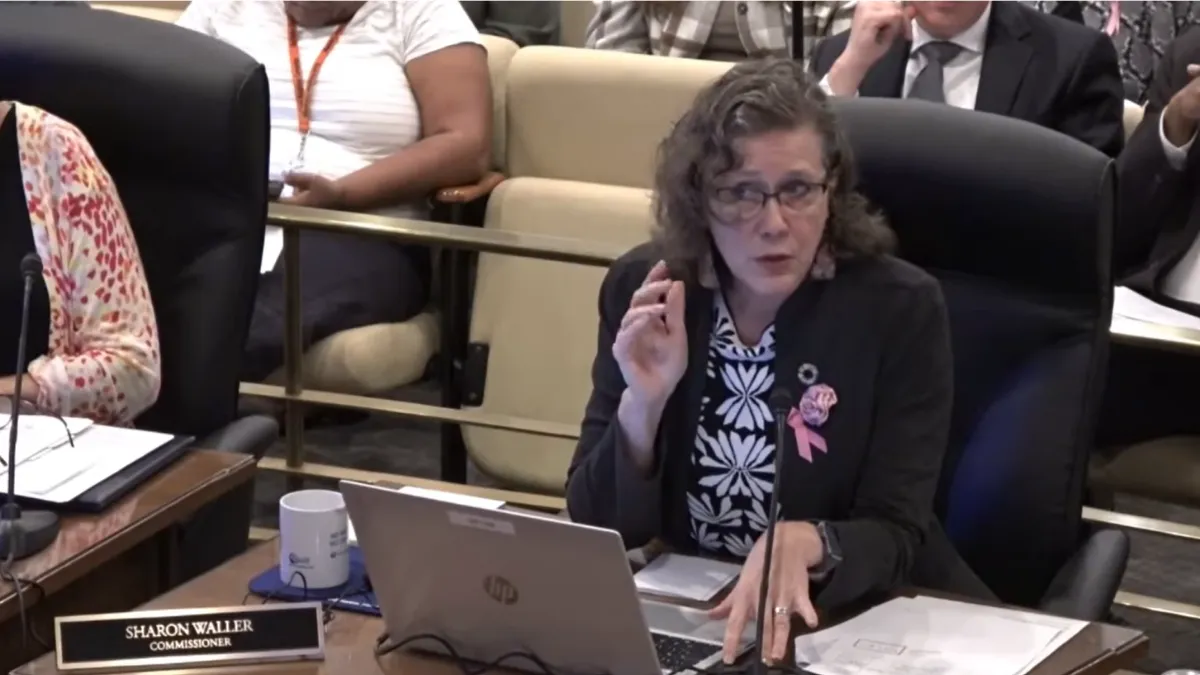
Questions Over ‘Forever Chemicals’ Divide MWRD Board on Biosolids Plans (Chicago, IL) — Questions about when the public should see testing data on “forever chemicals” drew scrutiny at an October meeting of the Metropolitan Water Reclamation District of Greater Chicago, as commissioners considered contracts involving the treated sewage solids used to fertilize farmland.
The board voted October 1 to seek bids for a three-year farming contract at its Hanover Park Water Reclamation Plant, estimated at $1.125 million. The work includes preparing fields, growing and harvesting crops, and injecting biosolids below the soil surface. The authorization covers the bidding process; it does not award the contract to a company.
Commissioners Sharon Waller and Cameron Davis opposed that proposal, according to the League of Women Voters of Cook County’s meeting observer report. The other seven commissioners supported it.
Two larger proposals involving biosolids transportation and agricultural reuse were deferred that day, then approved at the board’s October 15 meeting.
At the center of the October 1 discussion was Waller’s request for information about PFAS concentrations in the material. The League’s report said she asked that the district make its testing data available to the public.
According to that account, Executive Director John Murray initially indicated the information was online, then clarified that PFAS data were still being collected and that he would be comfortable releasing them in January 2027. He also agreed to provide commissioners a memo after the meeting.
Murray cited the long planning schedule for managing biosolids when Waller asked whether approval could wait for the concentration data, the observer report said.
The discussion concerned a material that wastewater agencies produce as part of their daily operations. Biosolids are treated sewage solids that can be used as fertilizer or to improve soil. Treatment and reuse are subject to federal requirements, but the material can also contain pollutants that enter sewers from households and businesses.
PFAS, short for per- and polyfluoroalkyl substances, are a large group of chemicals used in consumer products and industrial processes. Some persist in the environment for long periods, prompting the nickname “forever chemicals.”
The MWRD says wastewater utilities receive these chemicals rather than manufacture them, and that conventional wastewater treatment lacks a feasible, cost-effective way to remove them. The district reports producing approximately 150,000 tons of biosolids annually.
In its public explanation of the issue, the agency says its testing has found PFAS concentrations comparable to those at treatment plants that do not receive discharges from PFAS manufacturers or high-volume industrial users. It maintains that research supports continued agricultural use of municipal biosolids like its own, and says reducing pollution before it enters the sewer system is the most effective approach.

Federal officials are also examining how biosolids should be managed. The U.S. Environmental Protection Agency released draft guidance in July on reducing potential risks from PFOA and PFOS, two chemicals within the broader PFAS group.
The EPA’s recommendations include avoiding application near waterways, on land where children play and on crops associated with greater potential human exposure. The guidance is a draft, and its recommendations are voluntary. It does not establish that a particular MWRD field or shipment presents a health hazard.
The two proposals postponed on October 1 carried combined estimated costs of nearly $35.8 million. One would solicit transportation and utilization services for air-dried biosolids at an estimated $4.154 million. The other, estimated at $31.648 million, covers transporting semi-dry biosolids and centrifuge cake from district sites and applying them to agricultural land over two years.
Both returned to the board October 15 and received approval to proceed to bidding, district records show. The League’s follow-up report recorded five votes in favor and Waller opposed. It also reported that she acknowledged receiving an October 8 staff memo about PFAS before requesting separate roll-call votes.
The October 1 meeting included another action that was resolved two weeks later: the appointment of an inspector general.
A motion to name Patrick M. Blanchard to a six-year term was removed from the October 1 agenda. The board adopted the appointment October 15, with the term scheduled to begin January 1, 2027. The later vote means the earlier removal did not ultimately prevent the appointment.
Commissioners also advanced a substantial flood-control partnership with La Grange at the October 1 meeting. They authorized negotiations on an intergovernmental agreement providing up to $15.314 million toward the village’s 50th Street Storm Sewer Flood Relief Project.
District engineering staff estimate that the broader $37.803 million project would reduce overland flooding affecting 132 residential structures and help ease basement backups by diverting stormwater from combined sewers. The MWRD contribution would support lateral storm sewers connected to a new trunk sewer.
Under the proposed arrangement, La Grange would handle design, permitting, construction, operation and maintenance, and would be responsible for change orders. District payments are anticipated over three years after the agreement is executed, with future funding subject to budget approval.
Questions Over ‘Forever Chemicals’ Divide MWRD Board on Biosolids Plans