



Tinley Park Planners Delay Golf Club Proposal Over Late Hours (Tinley Park, IL) — Tinley Park’s Plan Commission put a downtown indoor golf proposal on hold after questioning whether customers playing until 2 a.m. could disturb residents living upstairs.
Commissioners voted 7-0 on Nov. 5 to table the request for The Ruff Indoor Golf Club until Nov. 19, seeking answers about late-night supervision, noise and access to the building’s residential floors. Several members welcomed the business concept but wanted to hear directly from owner Aaron Ruff before recommending operating conditions.
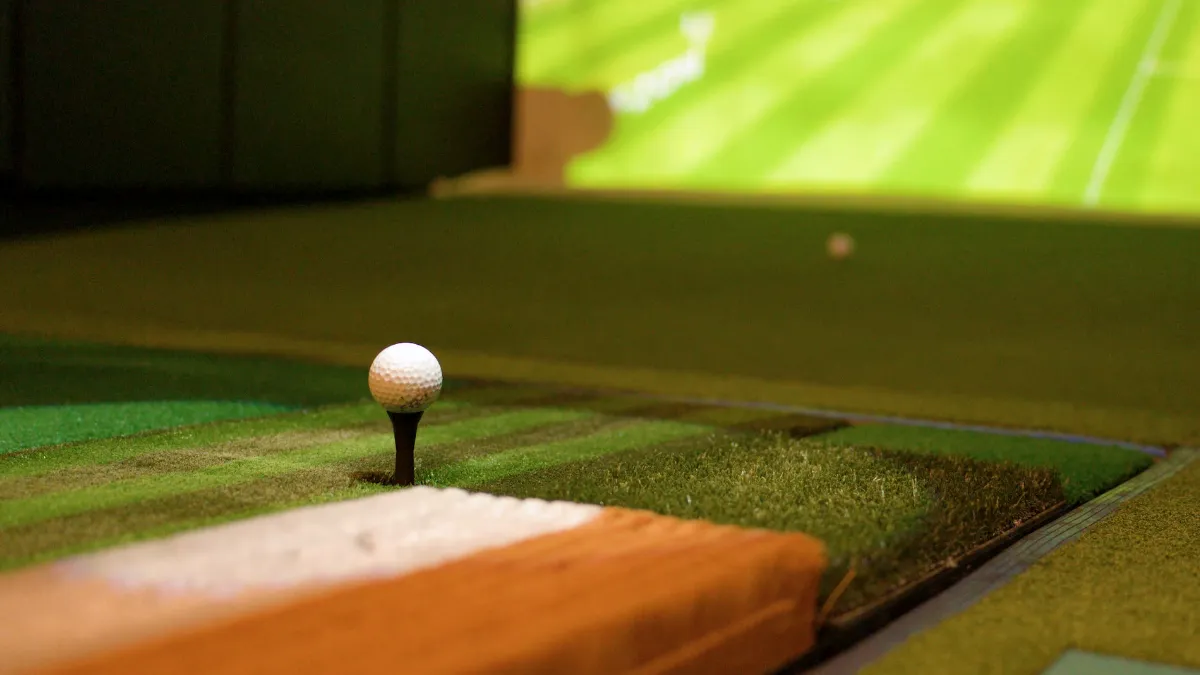
The club would occupy the former Hawaii Fluid Art space at 17200 Oak Park Ave., Suite C-104. Plans call for two golf simulator bays in just over 1,500 square feet, with reservations limited to five players per bay.
Customers would book online and receive a time-limited entry code. The business would generally operate without an employee on site, using surveillance cameras and security equipment for remote monitoring. Staff said Ruff lives nearby and would respond if problems arose.
The proposed hours are 6 a.m. to 2 a.m. Ruff initially sought a 24-hour operation but revised the proposal after staff told him that operating between 2 and 6 a.m. would require a separate special use approval.
Commissioner Andrae Marak said his concern extended beyond the sound of a club striking a ball. Even if the equipment was quiet enough, golfers talking or celebrating late at night could carry through to the homes above, he said.
“It’s people being there after midnight playing who might get loud,” Marak said.
Ruff was unable to attend because he was at the hospital with his wife, who was in labor, staff told the commission. His mother, Audrey Ruff, represented him and said the broad operating hours were intended to accommodate customers with different work schedules.
She also pointed to the planned video surveillance and said she believed her son would be open to having someone present during late hours if necessary.
Village staff presented evidence that the space could accommodate the use without substantial disruption. The building has commercial tenants on the ground floor and residences above, separated by a cast-concrete floor. The golf space also has a suspended ceiling with acoustic tiles, and each simulator would have an enclosure to catch stray balls.
According to staff, Ruff conducted noise tests with residents of the two units directly above the space and the owner of the neighboring bookstore. Each confirmed in writing that the noise impact during testing was minimal.
Chairman Garrett Gray acknowledged that work but questioned whether the tests captured what the business might sound like with both bays occupied and 10 people reacting to a game. He wanted residents to understand the potential conditions before the village approved the use.
Alcohol became another point of discussion, though staff emphasized that the zoning request did not itself authorize drinking on the premises.

Ruff intends to seek a Class P bring-your-own-beverage license for occasional private events. During those events, the business would close to the general public and Ruff or an employee would be present. Staff said the license would permit beer and wine, with no sales by the business, and would require separate review through the village’s liquor licensing process.
Commissioner Angela Gatto questioned how an unstaffed business could prevent customers from bringing alcohol during ordinary reservations. Marak separately raised the possibility of customers arriving after drinking elsewhere, when no attendant would be present.
Other commissioners described positive experiences at golf simulator businesses. Commissioner Steven Sepessy said one he had visited appeared well controlled, with customers behaving cordially.
Gray also asked staff to verify whether customers could reach the residential floors through a shared rear stairwell. Staff could not confirm at the meeting how the doors and access controls were secured.
The commission discussed an earlier closing time, including midnight or 11 p.m., and whether an attendant should be required during late hours. Staff also raised additional soundproofing or noise-monitoring equipment as possible ways to address concerns.
No revised hours or staffing requirements were adopted. Commissioners wanted Ruff to explain how those conditions would affect his business before they settled on a recommendation.
“I don’t want to hamstring your son,” Gray told Audrey Ruff during the discussion.
Staff said the commission could recommend conditions governing noise and customer behavior, and that the village’s noise ordinance would remain enforceable. They also noted that the business would have to satisfy applicable building-code sound requirements before receiving a certificate of occupancy.
No member of the public spoke on the proposal. The postponement left the special use request pending, with no recommendation sent to the Village Board.
The Nov. 19 meeting is also expected to include a public hearing on Tinley Park’s draft comprehensive plan. Staff said consultants from Lakota would present the document and take questions and comments from commissioners and residents.
Further revisions would follow the commission’s review before the plan goes to the Village Board for adoption. Staff said they hoped to bring it to the board in December or January, depending on how much additional review is needed.
Tinley Park Planners Delay Golf Club Proposal Over Late Hours