



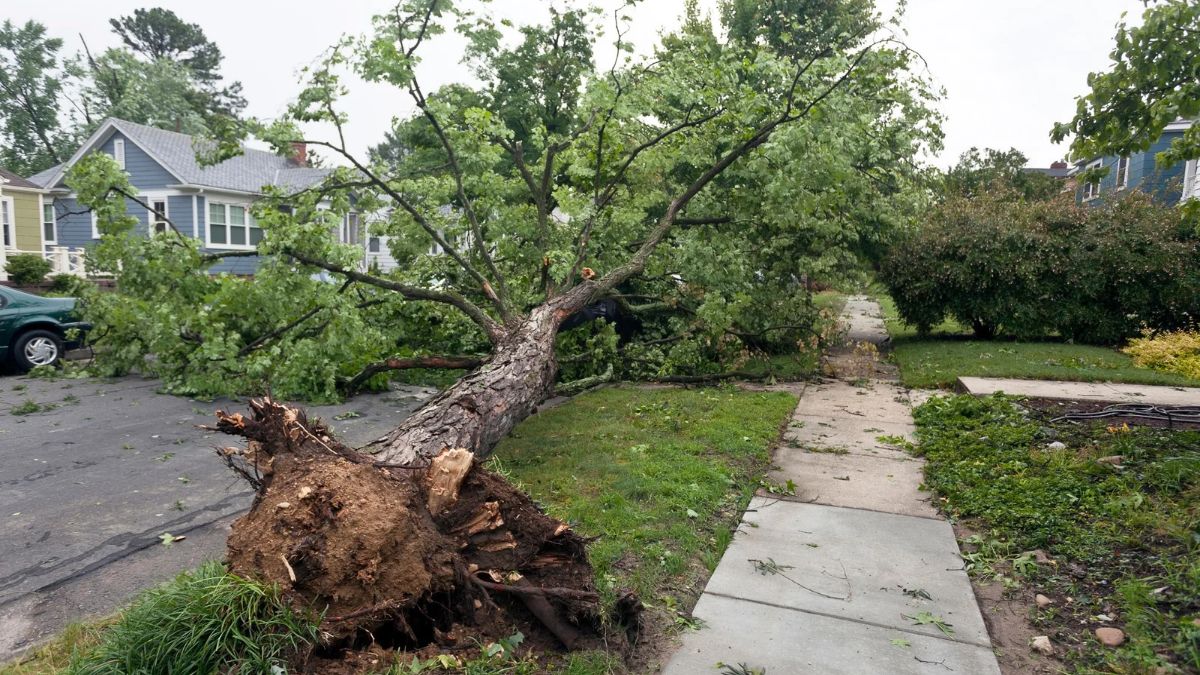
Cook County Commits $8 Million to Clear Storm Debris From South Suburban Communities (Cook County, IL) — Cook County is committing $8 million to help communities recover from the severe storms that swept through the region on Aug. 11, with much of the funding directed toward south suburban municipalities still dealing with massive amounts of storm debris.
Cook County Board President Toni Preckwinkle and the Cook County Department of Emergency Management and Regional Security announced the investment as local governments continue cleanup and recovery operations following storms that brought damaging winds, tornadoes, flooding, downed trees and power lines, structural damage and widespread debris.
The funding will provide direct assistance to 12 municipalities as Cook County works with local public works departments and other agencies to remove hundreds of thousands of cubic yards of remaining debris.
The scale of the cleanup has presented a significant challenge for communities that often have fewer resources available for large-scale disaster response.
“No community should have to shoulder the cost of recovering from a devastating storm on its own,” Preckwinkle said. “When federal assistance doesn’t come, Cook County will not stand by. This $8 million investment will help our municipalities clear debris, repair what was damaged and get residents back on their feet.”
Preckwinkle said smaller and under-resourced communities can struggle to manage the aftermath of disasters of this magnitude and emphasized the county’s role in supporting municipalities during the recovery process.
Cook County has already removed approximately 100,000 cubic yards of debris, an amount equivalent to roughly 5,700 average-sized dump trucks. Despite that work, county officials estimate that hundreds of thousands of additional cubic yards remain in affected communities.
The debris removal operation has brought several south suburban communities together to coordinate collection and consolidation. Debris is currently being gathered at 13 sites located in and around Chicago Heights, Dolton, Flossmoor, Ford Heights, Hazel Crest, Homewood, Lynwood, Matteson, Olympia Fields and Sauk Village, as well as the Homewood-Flossmoor Park District.
The county’s approach is intended to allow municipalities to pool resources and handle the enormous volume of material left behind by the storms.
Matteson Mayor Sheila Chalmers-Currin said the size of the cleanup would have been difficult for individual municipalities to manage without additional assistance.
“When a storm leaves behind this much debris, efforts to rebound can become bigger than any one village or township can handle on its own,” Chalmers-Currin said. “Our teams have worked tirelessly to clear our streets and neighborhoods and Cook County’s investment is giving us the additional capacity to finish this work and get our community closer to normal.”
As part of the response, EMRS requested assistance from the Illinois Public Works Mutual Aid Network, or IPWMAN, a volunteer organization that coordinates public works assistance during emergencies.
IPWMAN secured 40 trucks to help with the debris removal effort. County officials said collection from the existing debris sites is expected to take approximately two weeks.
After collection, the material will be transported to three regional consolidation sites in Chicago Heights, Flossmoor and Matteson. From those locations, debris will be prepared for further removal and processing.
The Aug. 11 storms were part of a series of severe weather events that affected Cook County during the summer. The storms caused widespread damage across multiple municipalities, including downed trees and utility lines, flooding, structural damage and other hazards.

Cook County issued a disaster declaration following the Aug. 11 storm and deployed emergency management resources to assist communities dealing with the immediate aftermath.
EMRS coordinated with municipal officials, local emergency management agencies, first responders and public works departments following the storm. The department also worked with state and federal partners to assess damage and determine what resources were available to affected communities.
Flossmoor Mayor Michelle Nelson credited the county’s emergency management department with helping the village maintain essential operations following the storm.
“The collaboration between the Village of Flossmoor and Cook County’s EMRS was instrumental in maintaining operational stability, safety and essential village services in the immediate aftermath of the storm,” Nelson said.
Nelson said the partnership also helped the village move through the initial cleanup phase and that Flossmoor expects to continue working with EMRS during the restoration process.
The county’s latest investment is also tied to concerns about the availability of federal disaster assistance.
Following severe storms in 2025, the federal government denied Cook County’s request for federal disaster assistance. In response, the county established a $15 million one-time relief program to provide direct assistance to residents who continued to deal with storm-related damage.
County officials said the current $8 million investment builds on that experience and reflects a decision to provide local support when other sources of disaster funding are unavailable.
Alex Joves, executive director of EMRS, said debris removal is among the most persistent and visible problems communities face after a major storm.
“Cook County has been working shoulder to shoulder with our municipal partners since these storms hit,” Joves said. “We know that debris removal is one of the most visible and persistent challenges communities face after a major storm. This crucial investment gives us the ability to help municipalities address that challenge head on and continue the necessary work of recovery.”
The county said it will continue working with municipal, state and federal partners as cleanup and restoration efforts continue. Officials also plan to pursue additional resources that could help communities affected by the summer’s severe weather.
For residents in the affected south suburbs, the debris removal effort represents another stage in a recovery process that began immediately after the Aug. 11 storms. While emergency response addressed immediate threats to public safety and essential services, officials say the removal of storm debris remains a major obstacle to fully restoring neighborhoods.
The county’s $8 million commitment is intended to help communities complete that work and move closer to normal operations after a summer of severe weather.
Cook County Commits $8 Million to Clear Storm Debris From South Suburban Communities