


Corbett Challenges Pritzker Over Proposed Property-Tax Deal for Bears Stadium (Palatine, IL) — Independent gubernatorial candidate Collin Corbett is criticizing Gov. JB Pritzker over discussions surrounding a potential new Chicago Bears stadium, accusing the governor of backing a property-tax arrangement that would give the NFL team a major tax break while Illinois homeowners continue to face rising property-tax bills.
Corbett’s criticism comes as the Bears’ long-running effort to build a new stadium in Illinois has entered another phase, with state and local officials weighing the financial and tax implications of keeping the franchise in the state.
At the center of the debate is whether a new Bears stadium should be treated as taxable property and, if so, how much the team should contribute to local governments that provide public services around the facility.
Corbett said Pritzker has previously opposed allowing a new Bears stadium to avoid property taxes but is now pursuing a different position in negotiations involving the team.
“JB Pritzker flip-flopped and now he’s cutting a deal to let the Bears pay $0 in property taxes for a new stadium,” Corbett said in a statement.
He argued that a tax arrangement benefiting the Bears would be particularly difficult to justify at a time when Illinois homeowners are dealing with high property-tax burdens.
“He’s finally getting off the sidelines, but with a bad deal for working families who are getting crushed by property taxes,” Corbett said. “Where is their 100% tax break?”
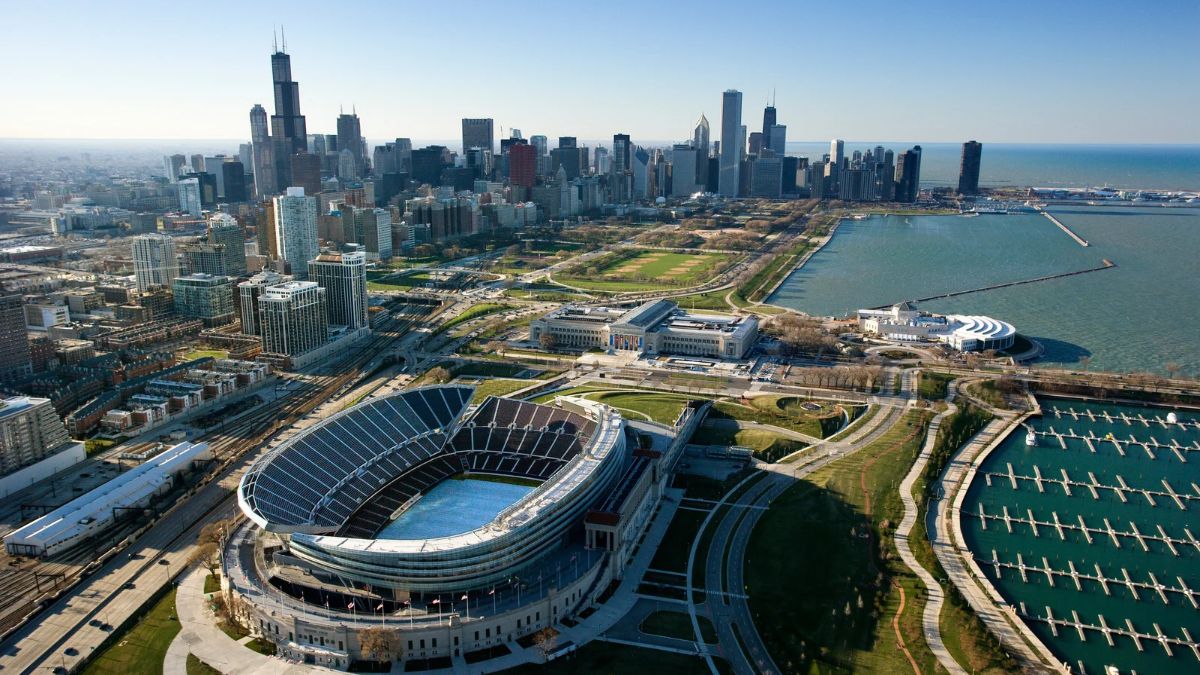
The Bears’ stadium plans have been driven in large part by the organization’s desire to leave Soldier Field and build a new, modern facility capable of supporting year-round events and surrounding development.
The Arlington Heights project, however, has faced significant obstacles, particularly over property taxes and the valuation of the proposed stadium.
The Bears have argued that a new stadium and surrounding development would generate substantial economic activity and tax revenue. Local taxing bodies, meanwhile, have raised concerns about how the stadium would affect their revenues and the cost of providing public services.
The organization has also explored other options as it seeks a long-term home. The Bears currently play at Soldier Field under a lease that has historically made the city-owned lakefront stadium their home. The team has made clear that it wants a facility designed specifically for modern NFL operations, including significantly greater surrounding development and revenue-generating opportunities.
The stadium question became particularly complicated because a professional sports stadium can have a very different property-tax profile from conventional commercial development.
A stadium that is exempt from property taxation would not contribute property taxes in the same manner as taxable commercial property, potentially affecting municipalities, school districts, park districts, libraries and other local taxing bodies that rely on property-tax revenue.
That issue has been central to negotiations involving the Bears and state lawmakers.
Corbett contends that Illinois should not provide the team with a tax exemption without requiring a meaningful annual contribution to local governments.
“Meanwhile, our plan keeps the Bears in Illinois while securing $15 million annually in property tax payments,” Corbett said.

The $15 million figure is part of Corbett’s proposed approach to the stadium issue and represents his campaign’s position rather than an agreement currently adopted by state lawmakers.
The Bears have not simply been seeking a new stadium. The organization has also been pursuing a broader development strategy intended to provide revenue opportunities outside of football games. That distinction is important because the financial debate involves not only construction costs but also the long-term value of the land, infrastructure improvements, surrounding development and tax revenue generated by the project.
The team’s Arlington Heights proposal encountered a major roadblock when local property-tax negotiations became contentious. The Bears have argued that the stadium’s assessed value should reflect the economics of a professional sports facility rather than a conventional commercial property. Local taxing bodies have expressed concern that reducing the stadium’s tax liability could shift costs or reduce revenue available for public services.
Pritzker has previously been involved in discussions about keeping the Bears in Illinois and has indicated that the state has an interest in ensuring the franchise remains in Illinois rather than moving to another state.
The governor has also faced pressure from lawmakers and local officials to strike a deal that protects taxpayers while preserving the economic benefits associated with the Bears.
For Corbett, however, the dispute represents a broader question about how Illinois treats large corporations and ordinary taxpayers.
His campaign has framed the stadium negotiations as an example of what it describes as an unequal tax system, arguing that homeowners should not be asked to shoulder increasingly expensive property-tax bills while a professional sports franchise receives favorable treatment.
The issue could become increasingly significant as the 2026 gubernatorial campaign develops. Pritzker, a Democrat seeking another term, is facing a field that includes candidates attempting to distinguish themselves on taxes, government spending and economic development.
Corbett, a Palatine resident and independent candidate, is positioning himself as an alternative to both major political parties. His campaign biography describes him as a political strategist and small-business owner who has spent more than two decades recruiting and training people to participate in civic and political campaigns.
He has said he has trained more than 3,500 people and helped advance nearly 1,200 organizations and campaigns nationwide.
The Bears stadium dispute gives Corbett an opportunity to connect a high-profile economic-development project with one of the most persistent issues facing Illinois taxpayers: property taxes.
For the Bears, the stakes are equally significant. The franchise is seeking a long-term stadium solution that could shape its operations and finances for decades. The organization has repeatedly emphasized the importance of controlling more of the revenue associated with its stadium and surrounding development.
For state and local governments, the question is whether retaining the Bears justifies the public incentives that may be required to make a new stadium financially feasible.
And for taxpayers, the central question remains how much of the cost should be borne publicly and how much should be paid by the team and its development partners.
Corbett said his proposed $15 million annual property-tax payment would provide a way to keep the Bears in Illinois while ensuring the franchise contributes to the communities surrounding its stadium.
“Who is actually standing up for working families in this state?” Corbett said. “Clearly not JB Pritzker.”
Corbett Challenges Pritzker Over Proposed Property-Tax Deal for Bears Stadium