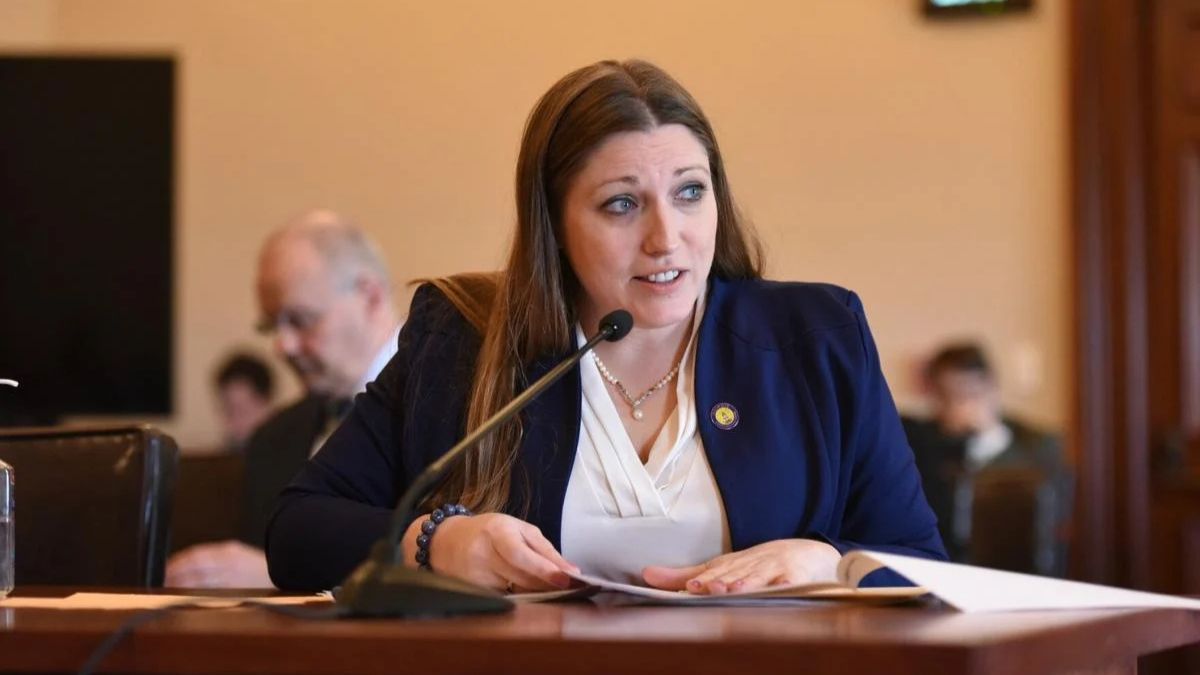
Ventura Pushes Constitutional Amendment to Limit Corporate Influence in Elections (Springfield, IL) – With the primary election season nearing its end, State Sen. Rachel Ventura is urging Illinois lawmakers to consider a constitutional amendment aimed at limiting corporate influence in elections and curbing the role of super PAC spending in political campaigns.
Ventura, a Democrat from Joliet, is advocating for Senate Joint Resolution Constitutional Amendment 10 (SJR CA 10), which would amend the Illinois Constitution to restrict corporations and other “artificial persons” from participating in election-related spending, including funding political campaigns or ballot initiatives.
“We’ve seen millions of dollars spent by corporations during this election cycle,” Ventura said in a statement. “If now is not the time to have a serious discussion about campaign finance reform, when is?”
The proposal comes amid a surge in outside spending in Illinois political races during the current election cycle. According to campaign finance reports cited by Ventura, the American Future PAC alone has spent about $2.6 million on legislative races.
Other outside groups have also poured significant money into Illinois campaigns. Common Ground has reported more than $1.1 million in spending, while Making Our Tomorrow has spent more than $500,000. Meanwhile, INCS, AFP Illinois and the Illinois Realtors have collectively spent nearly $600,000.
Outside spending has been even larger in Illinois congressional contests, where groups have spent approximately $31.4 million, bringing total spending in those races to nearly $62 million, according to the figures Ventura cited.
Under the proposed amendment, corporations would be defined as entities that exist by permission of the state and could only exercise powers explicitly granted by the Illinois Constitution or state law. The amendment would specify that those powers do not include participating in election activity or funding ballot issue campaigns.
Supporters of such measures argue that corporate spending can overwhelm the voices of individual voters and skew elections toward the interests of large organizations and wealthy donors.
The push in Illinois mirrors a broader national debate over the role of money in politics that intensified following the U.S. Supreme Court’s 2010 decision in Citizens United v. Federal Election Commission, which allowed corporations, unions and other outside groups to spend unlimited funds on independent political expenditures.
Ventura pointed to a similar effort in Montana, where voters are expected to consider a ballot measure this November known as the Transparent Election Initiative, aimed at increasing transparency and accountability in political spending.
In Illinois, the proposed amendment must pass both chambers of the General Assembly by the first week of May in order to appear on the November ballot. The measure is currently awaiting a committee hearing.
If approved by lawmakers and later by voters, the amendment would represent one of the most sweeping attempts by a state to restrict corporate participation in elections.
Ventura Pushes Constitutional Amendment to Limit Corporate Influence in Elections