UChicago Medicine Launches New Residency Programs to Strengthen Southland Physician Pipeline (Chicago, IL) – UChicago Medicine is expanding medical education and physician training opportunities in Chicago’s Southland with two new residency programs at UChicago Medicine Ingalls Memorial Hospital in Harvey.
The family medicine and internal medicine residency programs are part of a broader effort to develop Ingalls Memorial as a model academic community hospital while addressing physician shortages in the region.
Medical school graduates can begin applying for the family medicine residency through the Electronic Residency Application Service (ERAS) on Sept. 2. The internal medicine program is expected to begin accepting ERAS applications in late September.
“This investment is about more than launching two residency programs,” said Mike Antoniades, president of UChicago Medicine Ingalls Memorial. “It’s about strengthening the physician workforce in the Southland and building the kind of academic community hospital that can serve this region for generations to come.”
The new programs are designed to expand the local health care workforce in communities where access to physicians remains a concern. Approximately one-third of patients served by UChicago Medicine Ingalls Memorial are covered by Medicaid, while nearly one in five residents in the hospital’s service area live below the federal poverty level.
Vineet Arora, MD, dean for medical education at the University of Chicago Pritzker School of Medicine, said residency location can have a significant impact on where physicians ultimately practice.
“There’s a big push to correct these physician shortages and geographic maldistribution by expanding residency training opportunities, particularly in areas where there are health profession shortages and workforce needs,” Arora said. “Where you train in residency predicts where you practice.”
The three-year family medicine program will welcome eight residents in July 2027 and will eventually have 24 residents at full capacity in 2029.
Residents will primarily train at Ingalls Memorial and Family Christian Health Center, a nearby federally qualified health center serving underserved populations. Pediatric rotations will be conducted at UChicago Medicine Comer Children’s Hospital in Hyde Park.
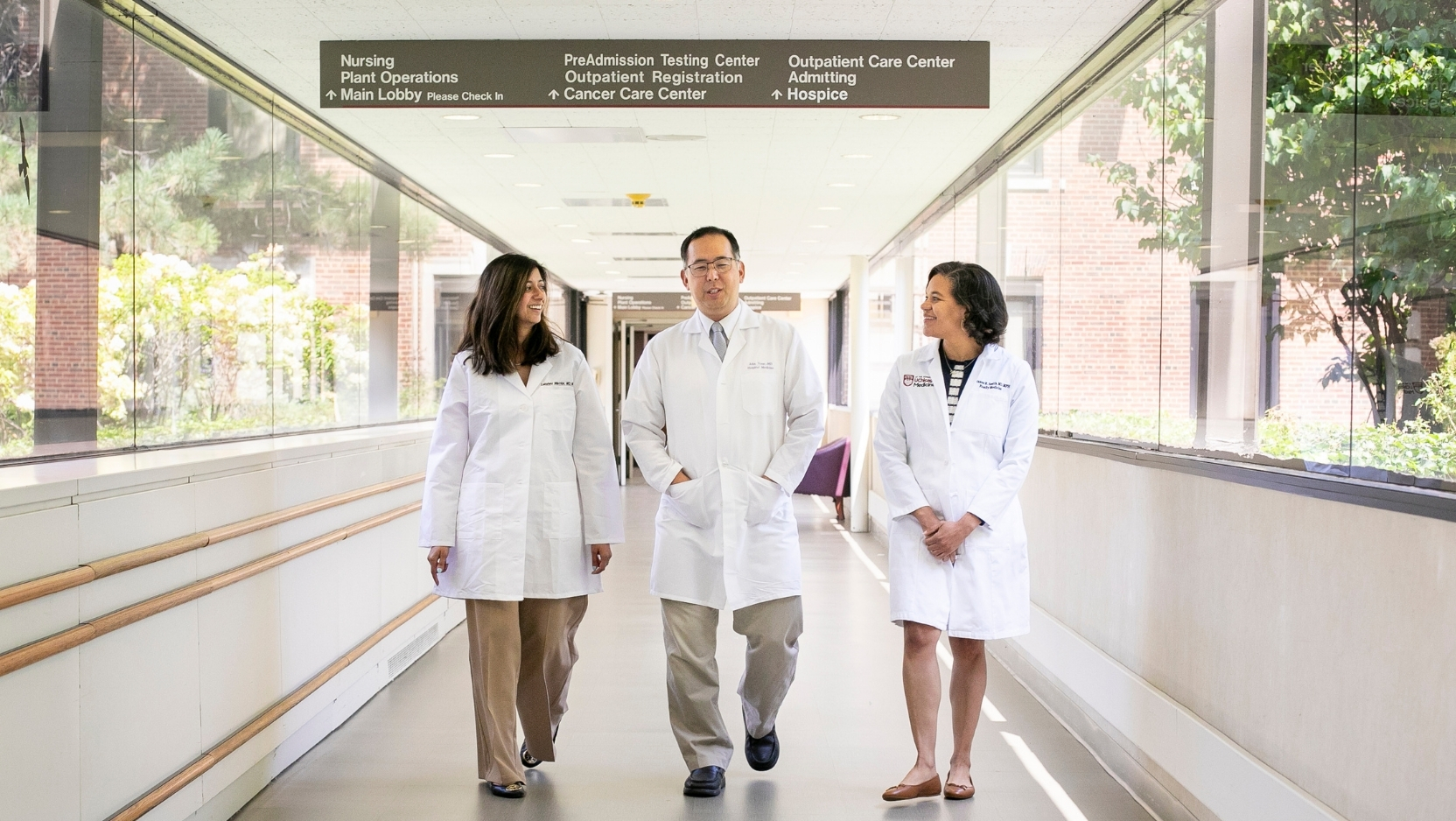
“This is a really unique opportunity for residents to train in a program that partners with trusted institutions, such as Family Christian Health Center, to address the social and structural forces that influence health,” said Roxanne Smith, MD, program director of the Family Medicine Residency at Ingalls Memorial.
The internal medicine residency will begin with 16 residents next July. Once fully staffed, the three-year program will have 48 residents.
Internal medicine residents will also spend time at a new outpatient clinic being constructed to help connect patients with ongoing care following hospital discharge.
The family medicine residency has already received approval from the Accreditation Council for Graduate Medical Education. The internal medicine program is expected to receive approval from the council in September.
The inaugural internal medicine residents will receive additional individualized supervision during their first year because there will not yet be upper-level residents available to oversee interns.
“Normally, upper-level residents oversee interns, but this initial class will receive additional personalized attention because attending faculty will be functioning as the supervising physicians as we build up the program,” said John Yoon, MD, program director of the Internal Medicine Residency.
Hospital officials said patients also could benefit from the increased physician capacity and educational environment created by the programs.
“When physicians are given the opportunity to teach, it keeps them at the top of their game — every case gets a second look, which benefits the patient,” said Lakshmi Warrior, MD, chief medical officer at UChicago Medicine Ingalls Memorial. “Resident trainees will also have a smaller roster of patients, meaning they can provide more personalized attention to each individual.”
Officials hope the residency programs will also encourage physicians who train at Ingalls Memorial to establish their careers in the Southland.
UChicago Medicine and Ingalls Memorial have spent approximately three years integrating services and hiring hospitalists in preparation for the residency programs. Christine Babcock, MD, associate dean for graduate medical education, said the health system expects to explore additional medical education opportunities as integration continues.
The programs are supported by institutional funding from UChicago Medicine as well as a $5 million grant from the Ingalls Development Foundation. The grant will help renovate space for resident call rooms and offices.
The residencies are also receiving support through the BridgeGME Chicago grant from the American Association of Colleges of Osteopathic Medicine Innovations in Graduate Medical Education Development. The initiative is a collaboration between the Chicago School’s Illinois College of Osteopathic Medicine and the Pritzker School of Medicine focused on expanding primary care residency training in underserved communities.
The new programs represent a significant investment in medical education and health care access for Harvey and communities throughout the Southland, while providing UChicago Medicine with another avenue to develop the next generation of physicians.
UChicago Medicine Launches New Residency Programs to Strengthen Southland Physician Pipeline