



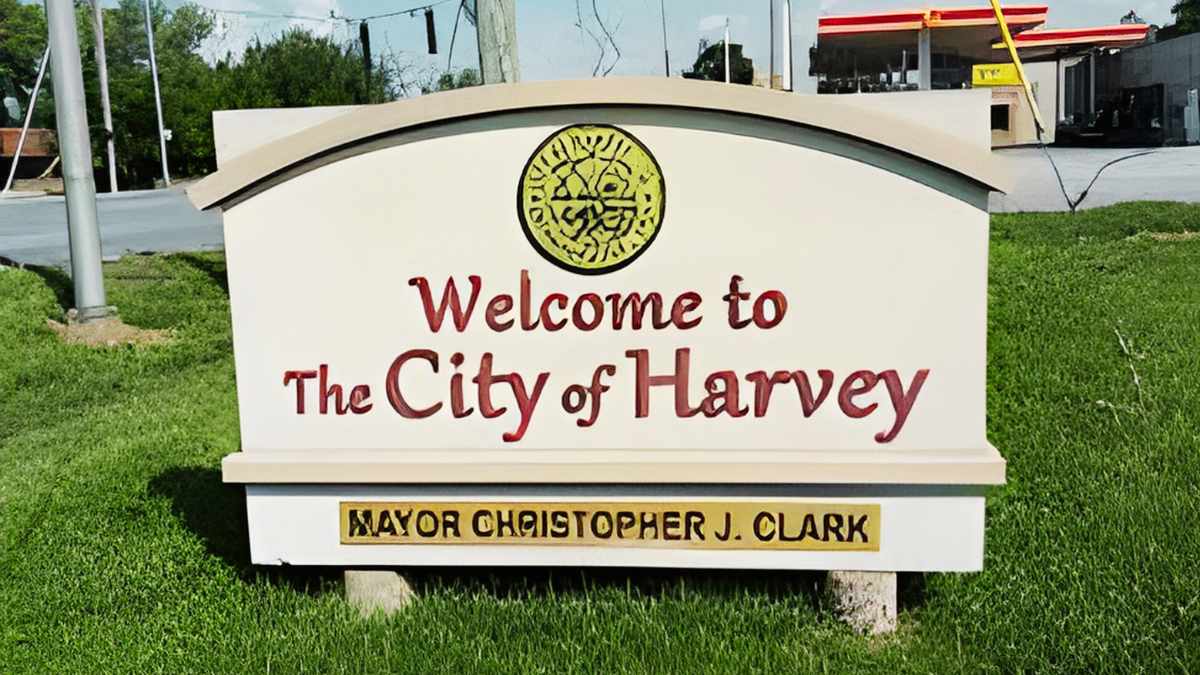
Harvey Calls Special Council Meeting as City Eyes “Financially Distressed” Designation Under State Law (Harvey, IL) — The City of Harvey has formally scheduled a Special City Council meeting for Thursday, October 16, 2025, at 5:30 p.m., to be held at 14618 Lincoln Avenue, city officials announced in a public notice. The meeting, called by Mayor Christopher J. Clark, will center on a presentation of the city’s financial condition and a proposal to request certification under Illinois’ Financially Distressed City Law.
Agenda Focuses on Financial Status, Potential State Oversight
The published agenda outlines the following steps: roll call, invocation, executive session if needed, presentation on Harvey’s finances, and public comment. Most critically, it includes an item labeled:
“An Ordinance Requesting Certification and Designation Under the Financially Distressed City Law.”
This move indicates that the city is potentially preparing to invoke the State’s mechanisms for oversight and assistance under 65 ILCS 5, Division 12 — the Financially Distressed City Law.
If the city council approves the ordinance, Harvey would request that the Illinois Department of Revenue certify the city meets the criteria for financial distress and that the General Assembly designate Harvey as a “financially distressed city.”
Under the statute, such a designation triggers the appointment of a Financial Advisory Authority (FAA), which becomes responsible for oversight of budgeting, contracts, and financial planning for the distressed city.
What the Law Entails: Oversight, Restrictions, and State Aid
The Financially Distressed City Law is intended to help municipalities maintain key services while restructuring finances. According to the statute:
- A city must first pass an ordinance requesting certification and designation, and file it with the Governor, Secretary of the Senate, and Clerk of the House.
- Once applicable, the law controls the city’s financial affairs: all budgeting, accounting, contract approval, and expenditures must conform to an approved Financial Plan and Budget.
- The FAA holds power to approve or reject financial plans, and may enforce compliance through “intercepts” (i.e., redirecting state payments due to the city) if the city fails to meet requirements.
- The city must submit balanced budgets and reports, and cannot unilaterally enter contracts that deviate from the approved financial plan.
- The oversight stays in place until the city sustains 10 consecutive years of balanced budgets, after which the FAA may be dissolved.
The law underscores that the goal is restoring fiscal health while preserving necessary municipal services.
What Comes Next for Harvey
City officials say Harvey must decide whether it formally requests certification. If approved by the council, the Ordinance would be filed with state authorities and, if accepted, the city would enter a phase of state-assisted oversight.
During the meeting, the public will have a chance to comment on the plan. If the process proceeds, the city’s finances will be closely scrutinized by the newly appointed FAA, which wields broad authority to monitor contracts, budgets, and spending.
To exit the oversight, Harvey must satisfy statutory conditions including consistent fiscal discipline over a decade of balanced budgets.
As the meeting approaches, residents and stakeholders will be watching closely to see whether the city pursues this path — one that carries both constraints and the promise of structural stabilization.
Harvey Calls Special Council Meeting as City Eyes “Financially Distressed” Designation Under State Law